
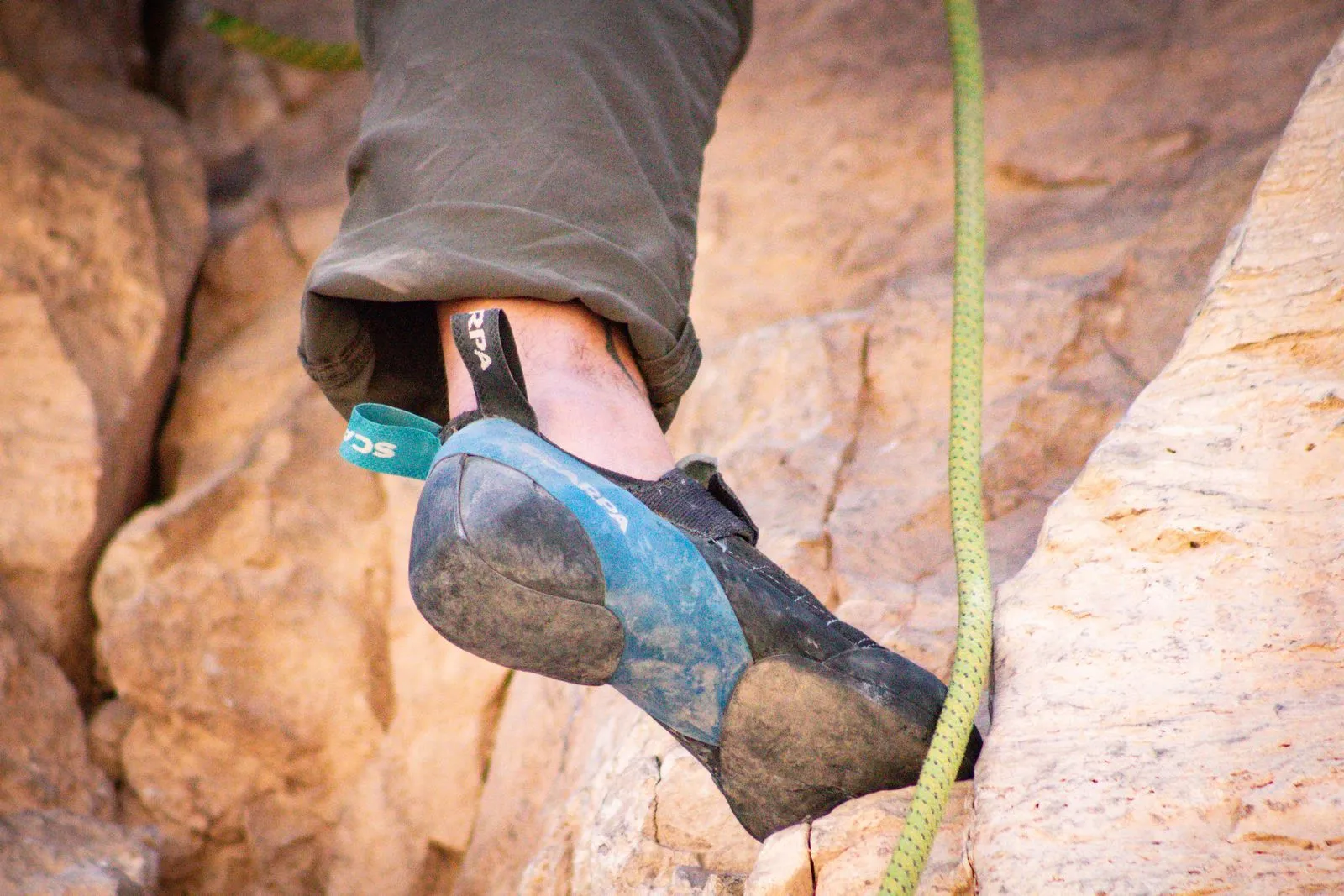
Your first climbing shoes should help you place your feet with confidence—not leave you counting the minutes until you can take them off. The right choice depends on how the shoe fits, how quickly you need to adjust it, and where you plan to climb. Instead of choosing the most aggressive-looking pair, compare these features against your experience and goals. A comfortable, close fit can support good technique while giving you room to progress.
Start With Fit
Climbing shoes should fit closely enough to keep your foot from sliding, but they should not cause sharp pain or numbness. Your toes may touch the front of the shoe, and some models place them slightly bent. For a first pair, avoid forcing your toes into a severely curled position. You need to stand, walk briefly, and press through your toes without feeling a hot spot or pinching.
Sizing varies by brand, model, and foot shape, so do not assume your climbing size matches your street-shoe size. Try shoes on near the end of the day, when feet may be a little larger. Test both feet, since they can differ. Stand on a small foothold if available, and notice whether your heel lifts or your foot shifts inside the shoe.
Match the Shape to Your Climbing
For gym sessions, beginner classes, and longer routes, a flatter, more relaxed shoe is often a practical starting point. It supports a natural foot position and can stay comfortable through repeated attempts. If you mostly climb steep routes or work on small footholds, a downturned shape may help direct pressure toward the toe—but it can feel less comfortable during long sessions.
Pay attention to width, toe shape, and heel volume, not just the shoe’s stated purpose. A shoe that fits your foot securely will usually serve you better than one designed for a style you rarely climb. If possible, try several models and use the same simple tests: stand on an edge, press on a foothold, and check for movement around your heel and instep.
Compare Closure Systems
Velcro closures are quick to put on and take off, which helps when you want to rest between climbs or adjust the fit during a session. They are convenient for gym use and bouldering. Check that the straps hold the shoe snugly without creating pressure across your foot, and make sure they are easy to tighten evenly.
Lace-up shoes offer more control over fit along the length of the foot. You can loosen the forefoot while keeping the heel secure, which can be useful if your foot shape is hard to match. Slipper-style shoes have no closure hardware and can feel streamlined, but their fit depends heavily on the shoe’s shape and stretch. For a first pair, choose the closure you will find easy to manage consistently.
Balance Comfort and Performance
A climbing shoe should feel secure, but discomfort is not proof that it fits well. Reject shoes that cause numbness, sharp pressure, or pain that makes you avoid using your toes. Leather models may stretch with wear, while synthetic uppers often change less; ask how a particular model is expected to break in rather than buying a painfully tight pair and hoping it will transform.
Think about how long you climb and how often you will remove your shoes. A beginner who spends several hours at the gym may value comfort and easy adjustment more than maximum precision. As your technique and preferences develop, you can consider a specialized pair for steep terrain, edging, or outdoor routes. Rochester Climb Co. can help you compare options in person; bring your usual socks, if you climb in them.
Choose a close, secure fit that lets you use your feet without distracting pain. Compare shapes and closures, then test each pair on a foothold before deciding. Your first shoes do not need to suit every style of climbing; they need to fit your feet and the sessions you actually plan to climb. Try on a few pairs and ask for guidance before you buy.